
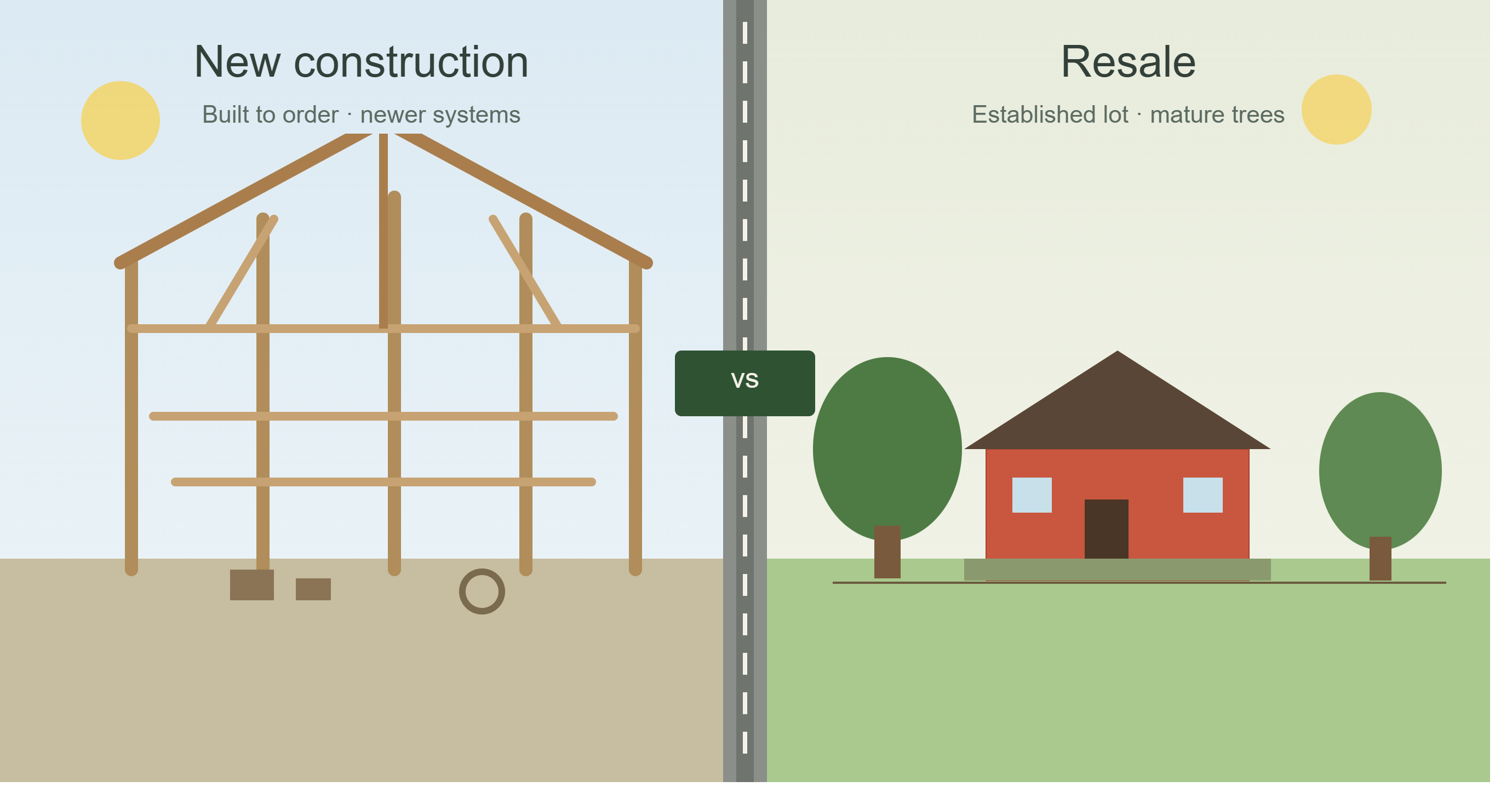
One of the first decisions buyers face in Clarksville is whether to build or buy new, or to purchase an existing resale home. Both paths are common here, especially with the amount of new construction happening on the north and southeast sides of the city, alongside a steady supply of resale homes in established neighborhoods closer to the city center and around Fort Campbell.
Neither option is automatically the better value. New construction is not always more expensive, and resale is not always cheaper. The right choice depends on your budget, timeline, location preferences, and how long you plan to stay in the home. This guide walks through the practical differences so you can weigh them against your own situation.
If you're just starting the process, our Buyers page covers the general steps from search to closing. For a look at specific neighborhoods, visit our Explore Areas section.
Purchase Price
New construction pricing in Clarksville is generally tied to the builder's current base price for a given floor plan, plus the cost of any upgrades or lot premiums you select. Resale pricing depends on the individual home, its condition, age, updates, and how it compares to similar homes that have recently sold nearby.
It's a mistake to assume one category is priced lower than the other across the board. A well-maintained resale home in a desirable neighborhood can be priced similarly to, or even above, a comparable new build, while some new construction communities offer base pricing that's competitive with older homes once you factor in the cost of updates an older home might need. The only reliable way to compare is to look at specific listings, not general assumptions about new versus old.
Builder Incentives and Closing Costs
Builders in the Clarksville area sometimes offer incentives on new construction, which can include contributions toward closing costs, rate buydowns, or upgrade credits, particularly when working with the builder's preferred lender. These incentives change frequently and vary by builder, community, and even by specific lot, so it's worth confirming current offers directly with the builder or your agent rather than relying on outdated information.
Resale purchases don't come with builder incentives, but closing costs are often more negotiable as part of the offer, especially depending on how a specific home is priced and how long it's been on the market. In both cases, closing costs are a real part of your budget, and it's worth asking early what's currently being offered or what's realistic to negotiate.
Timelines
This is one of the clearest differences between the two options. A resale home, once under contract, typically moves through inspection, financing, and closing on a schedule of a few weeks to a couple of months, depending on the transaction.
New construction timelines vary more. If you're buying a home that's already built or nearing completion, the timeline can look similar to a resale purchase. If you're buying a home that hasn't started construction yet, or selecting a lot and floor plan, the timeline can extend to several months or longer, depending on the builder's schedule and current backlog. If your move date is fixed, such as a PCS report date or a lease expiration, it's worth discussing realistic completion timelines with the builder before committing.
Customization Options
New construction typically allows for some level of choice, whether that's selecting finishes, layout options within a floor plan, or in some cases a more custom build depending on the builder. The amount of flexibility varies significantly from builder to builder and community to community. Some offer a wide range of structural and cosmetic options; others offer a more limited set of finish packages.
Resale homes come as they are. What you see is what you get, though buyers sometimes negotiate for the seller to complete specific repairs or updates before closing, or factor renovation plans into their offer and timeline after purchase.
Warranties
New construction homes typically come with a builder's warranty covering workmanship and materials for a set period, along with manufacturer warranties on major systems and appliances. The specific coverage and duration vary by builder, so it's worth reviewing exactly what's included.
Resale homes generally don't come with a builder's warranty, since that coverage is tied to the original construction and often has an expiration window even if it technically still exists. Buyers of resale homes sometimes purchase a home warranty separately to cover major systems and appliances during the first year of ownership, which can offer some peace of mind, particularly for older mechanical systems.
Inspections
Home inspections matter in both cases, though what buyers are typically looking for differs. On a resale home, an inspection often surfaces a mix of age-related wear, deferred maintenance, and sometimes larger issues with the roof, HVAC system, plumbing, or foundation that need to be factored into your offer or repair requests.
On new construction, an independent inspection is still worth doing, even though the home is new. Inspections on new builds sometimes catch installation issues, unfinished details, or items that were missed during the builder's own walkthrough. Many buyers assume a new home doesn't need an inspection since it hasn't been lived in, but an independent set of eyes before closing can catch things the builder's process didn't.
Maintenance and the Possibility of Repairs
A resale home, particularly an older one, may need repairs or updates sooner rather than later. Depending on the age and condition of the home, this could mean anything from cosmetic updates to bigger-ticket items like a roof, water heater, or HVAC system nearing the end of its expected lifespan. Buyers should factor the likely condition of major systems into both their offer and their budget for the first few years of ownership.
New construction homes generally require less maintenance in the early years, since most systems and materials are new. That said, new doesn't mean maintenance-free. New builds can still have minor issues that surface as the home settles, and routine maintenance is still necessary from day one.
Lot Size and Neighborhood Maturity
Lot sizes vary widely across both new and resale homes in Clarksville, so this isn't a strict rule, but there are some general patterns. Many newer subdivisions, particularly larger master-planned communities, tend to have more standardized, and sometimes smaller, lot sizes to maximize the number of homes in the community. Older, established neighborhoods sometimes offer larger or more varied lot sizes, along with mature trees and landscaping that take years to develop.
Neighborhood maturity is a related consideration. A newer subdivision may still be building out additional phases, which means ongoing construction activity nearby for a period of time. An established neighborhood is typically fully built out, with landscaping, sidewalks, and community character already settled.
Location Considerations
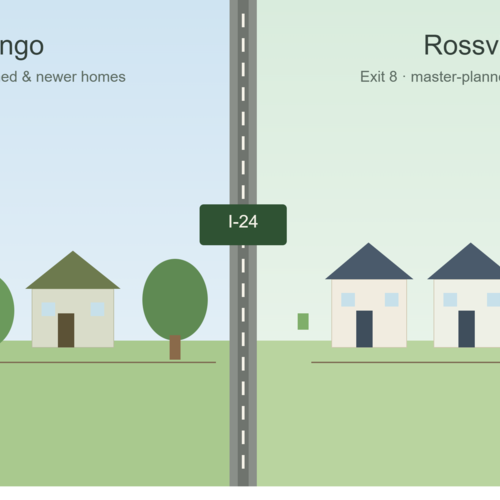
Where new construction and resale homes are concentrated in Clarksville differs somewhat. A significant amount of new construction activity has been happening in growing corridors like the Rossview area near Exit 8, while resale inventory is spread more broadly across the city, including areas like Sango, closer to downtown, and neighborhoods nearer Fort Campbell.
If a specific location is a priority, whether for commute reasons, proximity to Fort Campbell, or a particular part of town, that can naturally narrow whether new construction or resale is more realistic, since not every area has the same mix of available new builds versus existing homes. Our Sango and Rossview area pages are a good starting point if you're comparing specific parts of town.
Resale Value Considerations
Both new construction and resale homes can hold or build value over time, and neither category guarantees a stronger resale outcome. Resale value tends to depend more on factors like location, condition, maintenance history, and how the home compares to others in its neighborhood at the time you eventually sell, rather than simply whether it was new or existing when you bought it.
Buyers who plan to stay long-term sometimes weigh this differently than buyers with a shorter timeline, such as those who anticipate a future PCS move. If resale value is a significant factor in your decision, it's worth discussing with your agent how homes in a specific neighborhood or new construction community have generally performed over time.
Weighing the Decision
There's no universal right answer between new construction and resale. Some practical questions can help guide the decision:
- How firm is your move-in date? If your timeline is fixed, a completed or nearly completed home, new or resale, may be the safer choice over a home that hasn't started construction.
- Do you want to select finishes, or would you rather see exactly what you're getting? This is often the clearest dividing line between the two options.
- What's your tolerance for near-term repairs or updates? An older resale home may need more attention sooner; a new home generally needs less upfront, but still requires ongoing maintenance.
- How important is a specific location or neighborhood? Availability of new construction versus resale inventory varies by area.
- What's your budget once incentives, upgrades, or repair costs are factored in? The sticker price alone doesn't always reflect the full cost comparison.
If you're relocating for Fort Campbell, our Military Relocation page has additional resources for buyers navigating a PCS timeline alongside this decision.
Get Help Comparing Your Options
New construction and resale homes each come with their own set of tradeoffs, and the right fit depends on your specific priorities rather than a general rule about which is the better deal. The clearest way to decide is to look at real, current options side by side.
If you'd like help comparing new construction and resale homes in Clarksville, contact Cory Real Estate Services and we'll walk through available listings, builder communities, and what makes sense for your budget and timeline.
Check out this article next